

Common UPS Problems and How Regular Maintenance Can Prevent Them
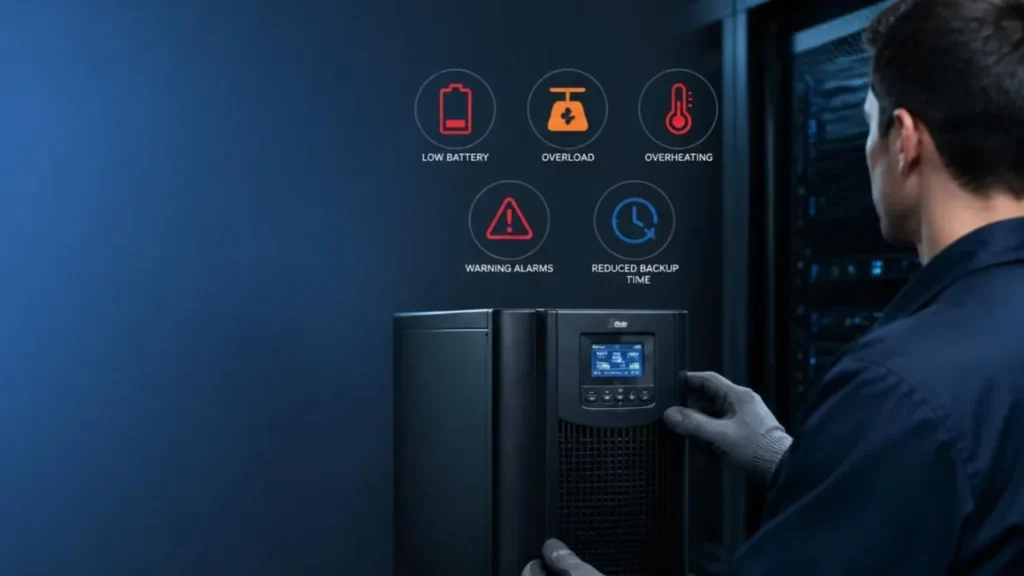
A UPS provides backup power when the main electricity supply is interrupted or becomes unstable. Like other electrical equipment, a UPS can experience operating issues related to battery condition, connected load, ventilation, environmental conditions, or other factors. Recognising Common UPS Problems early can help users understand what may be happening and decide whether a basic check or professional assessment is appropriate.
Some issues appear as reduced backup time, overload warnings, overheating, unusual noises, alarms, or unexpected shutdowns. While certain external conditions can be checked safely, electrical faults and suspected internal problems should be handled by qualified professionals.
What Are the Most Common UPS Problems?
- Common UPS Problems can affect backup availability, operating stability, or the way connected equipment receives power. Typical signs include shorter backup time, overload warnings, overheating, unusual noises, alarms, charging concerns, and unexpected shutdowns.
- These symptoms can have different causes. For example, shorter backup time may be associated with battery condition or changes in connected load, while an overload warning may indicate that the connected equipment is demanding more power than the UPS can appropriately support.
- The first step is to identify the symptom rather than assume that the UPS has failed. Checking the display, warning indicators, alarm messages, connected equipment, and surrounding conditions can provide useful information before further action is taken.
- The following sections look at the most important issues individually, starting with changes in backup time.
Why Is UPS Backup Time Getting Shorter?
- A reduction in backup time can occur for several reasons, and battery condition is one of the first areas to consider. Battery performance can change over time and with repeated charging and discharging. Changes in the connected load can also affect how long the UPS can support equipment during a power interruption.
- For example, adding computers, networking equipment, appliances, or other devices can increase the overall power demand. If the load has changed since the UPS was installed, its effect on backup performance should be considered.
- Operating conditions can also influence battery performance. Excessive heat, restricted ventilation, unsuitable environmental conditions, or charging-related issues may require attention.
- Good UPS Battery Maintenance involves monitoring changes in battery performance, checking the external condition where appropriate, and following the maintenance and replacement guidance provided for the specific UPS and battery system.
- If backup time changes significantly or unexpectedly, a qualified technician can assess the battery and other relevant parts of the system to identify the underlying cause.
Why Is a UPS Overloaded?
- UPS Overload occurs when the connected equipment requires more power than the UPS is designed or configured to support. This can happen after additional equipment is connected, when several higher-power devices operate together, or when the load changes significantly after installation.
- An overload may trigger a warning indicator, alarm, or message depending on the UPS model. Continued overload conditions can interfere with normal UPS operation and may contribute to unexpected shutdowns.
- Users can begin by reviewing the equipment connected to the UPS and identifying devices that may no longer need backup power. The UPS capacity and the requirements of the connected equipment should also be considered when reviewing the load.
- If an overload warning remains after the connected equipment has been reviewed, users should not open the UPS or attempt internal adjustments. A qualified professional can determine whether the problem is related to the connected load, system configuration, or the UPS itself.
- Once load-related concerns are understood, other operating symptoms such as heat and unusual noise should also be considered.
Why Is a UPS Overheating or Making Unusual Noises?
- A UPS needs suitable airflow and ventilation during operation. Restricted airflow, accumulated dust, high surrounding temperatures, or insufficient clearance can contribute to increased operating temperature.
- Unusual noises should also receive attention when they differ from the UPS’s normal operating sound. Fans or alarms may produce sounds during certain conditions, but a persistent or unfamiliar noise can indicate that further assessment is appropriate.
- Users can safely check whether ventilation areas are obstructed and whether the equipment has suitable clearance around it. The surrounding area should also be kept reasonably clean and free from excessive dust, heat, or moisture.
- These external checks should not involve removing covers or accessing internal components. If overheating continues, an alarm appears, or unusual noise persists, professional inspection may be necessary.
- After identifying the main symptoms, users can move to basic checks before deciding whether professional assistance is required.
How Can You Troubleshoot a UPS Problem?
- Basic UPS Troubleshooting should begin with safe external checks rather than internal repairs. Start by reviewing warning indicators, display messages, and alarm conditions shown by the UPS.
- Next, consider whether the connected load has recently changed. If an overload warning is present, review the equipment connected to the UPS and remove unnecessary devices only where it is safe and appropriate to do so.
- The surrounding environment should also be checked. Make sure ventilation areas are not blocked and look for obvious external conditions involving dust, heat, or moisture. Power connections may be visually checked for obvious problems, but users should never handle exposed wiring, damaged electrical connections, or live components.
- If the UPS continues to show warnings, shuts down unexpectedly, overheats, produces unusual noises, or does not provide expected backup, further user-level troubleshooting should stop. At that point, qualified technical support can help identify the cause safely.
- Troubleshooting addresses an existing symptom. Regular maintenance, however, focuses on identifying potential problems before they become more disruptive.
How Can Regular UPS Maintenance Prevent Problems?
Regular UPS Maintenance helps users monitor important areas such as battery condition, connected load, ventilation, operating environment, and warning indicators. The purpose is not simply to respond to a fault but to identify changes that may require attention.
UPS Preventive Maintenance should be appropriate to the specific equipment and should follow the manufacturer’s recommendations. Important areas to monitor include:
| Maintenance Area | What to Check | Why It Matters |
|---|---|---|
| Battery | Condition, age and backup performance | Helps identify battery deterioration |
| Load | Connected equipment and UPS capacity | Helps reduce overload risk |
| Ventilation | Airflow and surrounding clearance | Helps manage operating temperature |
| Environment | Dust, heat and moisture exposure | Supports suitable operating conditions |
| Alarms | Warning indicators and event history | Helps identify abnormal conditions |
| Professional service | Periodic technical inspection | Helps identify issues requiring specialist attention |
Battery condition deserves particular attention because changes in battery performance can affect backup availability. UPS Battery Maintenance may involve monitoring backup behaviour, checking the external condition where appropriate, and arranging professional testing when required.
Keeping basic maintenance records can also be useful. Recording significant alarms, changes in connected equipment, service activities, and observed performance can give technical personnel useful information when assessing the UPS.
When maintenance checks identify an issue that cannot be safely resolved through external inspection, professional support becomes important.
When should I call a UPS technician?
- Not every UPS issue should be handled through user-level checks. Professional assistance is appropriate when a problem continues after basic external inspection or when the issue may involve internal electrical or hardware components.
- Examples include persistent alarms, repeated overload warnings, ongoing overheating, unusual noises, unexpected shutdowns, electrical faults, or significant changes in backup behaviour. Visible damage, burning smells, exposed wiring, or other potentially hazardous conditions also require appropriate professional attention.
- A qualified technician can inspect the UPS using suitable procedures and determine whether maintenance, testing, repair, configuration changes, or component replacement may be required.
- Users should never open the UPS or attempt electrical repairs without the appropriate qualifications and procedures. When an issue involves internal components or presents a potential electrical hazard, safety should take priority over attempting to resolve it independently.
Conclusion
UPS issues can develop for different reasons, so identifying the symptom is an important first step. Changes in backup time may require attention to battery condition and connected load, while overload warnings, overheating, and unusual noises may indicate that the operating conditions need to be reviewed.
Regular UPS Maintenance and appropriate UPS Preventive Maintenance can help identify developing issues and support suitable operating conditions. Basic UPS Troubleshooting can address some safe external checks, but persistent warnings, electrical faults, overheating, or suspected internal problems should be assessed by a qualified professional.
Frequently Asked Questions
What causes UPS Overload?
UPS Overload happens when connected equipment requires more power than the UPS can support.
Why is UPS backup time getting shorter?
Battery condition, increased load, charging issues, heat, or environmental conditions may reduce backup time.
Why is UPS overheating?
Blocked airflow, dust, heat, or poor ventilation may cause overheating.
Why is UPS making unusual noises?
Unusual or persistent noises may indicate a condition that needs professional inspection.
What is UPS Troubleshooting?
UPS Troubleshooting means checking safe external conditions to identify the possible cause of a UPS problem.
What is UPS Preventive Maintenance?
UPS Preventive Maintenance involves regular checks of batteries, load, ventilation, alarms, and operating conditions.
Need Expert UPS Service?
Thanish Technologies — 30 years of trusted power solutions.
Our Products
Home UPS Series
600 VA – 5 kVA
Commercial Series
1 kVA – 20 kVA
Corporate Series
6 kVA – 120 kVA
Industrial Series
20 kVA – 500 kVA
Batteries & Stabilizers
All capacities
Popular Searches
Top 10 UPS Brands in India 2025
May 31, 2025 · 3 min read
Online vs Offline UPS — Full Comparison
Apr 20, 2025 · 5 min read
Top 10 UPS Brands in India 2025
Mar 5, 2025 · 4 min read
Online vs Offline UPS — Full Comparison
Mar 5, 2025 · 4 min read